 Japanese


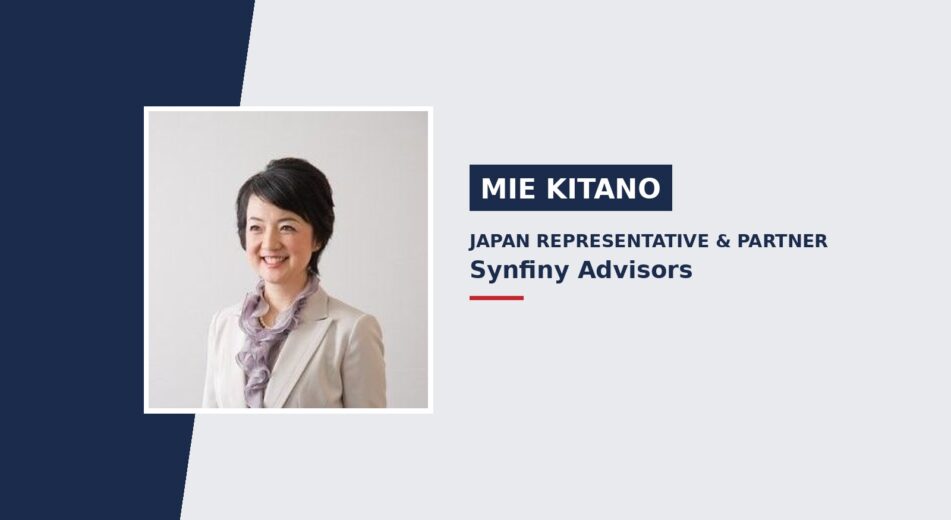
Insights from our Bridging Borders conversation with Mie Kitano, Japan Representative & Partner, Synfiny Advisors
Idea in Brief
The problem. Foreign companies routinely pass over strong Japanese partners, or negotiate them down, and later discover the capability was there all along.
Why it happens. Japanese companies present themselves to maximize credibility. Western executives evaluate presentations to maximize persuasion. The result is a systematic mismatch: modesty is read as low confidence, and low confidence is read as limited capability.
What to do. In Japan, the usual correction runs backwards. Assume the partner is underselling, evaluate on substance rather than confidence, and adjust their self-description upward rather than down.
A foreign company evaluating a potential Japanese partner runs, usually without noticing, a familiar mental calculation. It listens to how the partner describes its own technology, weighs the confidence of the claim, and forms a judgment about capability. In most of the world, that calculation works, because confidence and competence tend to travel together: a company with a strong product usually says so, and a company that undersells is usually hiding a weakness.
In Japan, the same calculation produces the wrong answer — and we see foreign companies get it wrong constantly. They meet a Japanese partner with genuinely superior technology, hear a modest and understated pitch, and quietly downgrade their assessment. Sometimes they walk away. More often they proceed, but negotiate as though they are dealing with a weaker party than they actually are. Either way, they have misjudged the single most important variable, because they scored the partner’s confidence when they believed they were scoring its competence.
Few people have watched this misjudgment play out from both sides as often as Mie Kitano. Across a career at Procter & Gamble and Eli Lilly spanning Japan, the United States and Germany, and now as Japan Representative and Partner at Synfiny Advisors, she has evaluated Japanese suppliers for global buyers and represented Japanese capability to global markets. Her experience exposes exactly where the calculation breaks.
The partner who couldn’t sell themselves — and didn’t need to be worse
Running innovation sourcing from the United States, Kitano kept hitting the same wall with Japanese partners. Their technology was strong. Their presentation of it was not.
“The innovation brought forward was always what we call enryo-gachi — they wouldn’t be proud and bold enough to say that they’re great.”
What she did about it is the tell. She rewrote their presentations — not to inflate them, but to state plainly what the Japanese partners were too reserved to claim for themselves. Left in their original form, superior technology was losing to inferior competitors who simply presented with more conviction. The capability was never the problem. The translation was.
She is emphatic, too, that this is not a language barrier — the assumption most foreign executives reach for first. “It’s not about the language,” she says; “it’s about communicating your thinking” in a way others can grasp. The Japanese partners were not failing to speak English. They were declining to make a claim their own culture had trained them not to make. That distinction matters, because a language gap is solved with translators and a communication gap is not — it requires the evaluator to change how they listen.
Why the modesty is systematic, not personal
It would be easy to read this as national humility, a cultural quirk. In our experience that reading is both condescending and useless, because it gives a foreign operator nothing to act on. The sharper explanation is that Japanese and Western companies optimize their self-presentation for two different things.
A Japanese company, operating in its home environment, optimizes for credibility. In a market built on long relationships and trust, overclaiming is dangerous: if you say you are the best and are later shown to be merely good, you have damaged the thing that matters most. Understatement is therefore not weakness or excess modesty. It is a rational trust-preservation strategy — claim less than you can deliver, so that delivery always exceeds the claim.
A Western company optimizes for persuasion. In a market of shorter, more transactional relationships and competitive pitching, the job of a presentation is to win the decision in the room. Confidence is a feature, not a risk, because the downside of overclaiming is diffuse and the upside of winning the pitch is immediate.
Neither approach is wrong at home. The failure happens at the border, when a Western evaluator applies persuasion-culture scoring — confidence as a proxy for competence — to a partner presenting by credibility-culture rules. And it produces an inversion worth sitting with: the stronger the Japanese partner’s discipline about not overclaiming, the more the foreign side underestimates them. The very quality that makes the partner most trustworthy — their refusal to say more than they can prove — is the quality that causes the foreigner to undervalue them most. The better the partner, the worse the misread.
The correction: listen for what is being undersold
Once the mechanism is clear, the fix follows, and it echoes something Kitano learned early from a Japanese manager:
“We have two ears and one mouth — you have to listen double, and then speak.”
She pairs it with a distinction we think is essential for any foreign operator in Japan: listening versus judging. The failure is not that foreign companies don’t listen; it is that they listen while already forming a verdict, hear the modest claim, and file it as the whole truth. Listening properly means hearing what sits beneath the understatement — the capability the partner is too disciplined to assert. In Japan, the reserved pitch is a floor, not a ceiling.
This inverts the habit most executives bring to any evaluation. In a persuasion culture you discount what you are told, assuming the other side is overselling. With a Japanese partner, we consistently find the correct adjustment runs the other way: assume the description understates the capability, and verify on substance rather than on how confidently that substance is presented. The operator who scores the demonstration, the reference, and the engineering — rather than the self-assurance of the person delivering them — sees the partner as they actually are.
What the reframe is worth
This is not an argument for taking Japanese partners on faith. It is the opposite: an argument for evaluating them more accurately, by stripping out a confidence bias that Western business instinct installs by default. The companies we see build the strongest positions in Japan are the ones that recognize this early — that treat a modest Japanese pitch as a translation problem rather than a capability verdict, and do the work of assessing what is actually there.
The discipline reduces to a single reversal. When a Western partner presents, discount for persuasion. When a Japanese partner presents, correct upward for credibility — and judge the capability, not the confidence. Foreign companies that miss this don’t just negotiate badly; they walk past their best opportunities in Japan without ever knowing the capability was there.
Because in Japan, confidence is one of the least reliable indicators of capability.
Ready to Navigate Japan?
Reading Japanese capability accurately — past the modesty, to what is actually on offer — is one of the most consequential judgments a foreign company makes here. It is also one we help clients make. If you are building or scaling in Japan, we would welcome a conversation.
This article draws on our Bridging Borders podcast conversation with Mie Kitano, Japan Representative & Partner, Synfiny Advisors.
By Nitin Mehra
Founder, Bridge Nippon
Ready to Navigate Japan Successfully?
Get in touch with the Bridge Nippon team to discuss your Japan market entry strategy.